




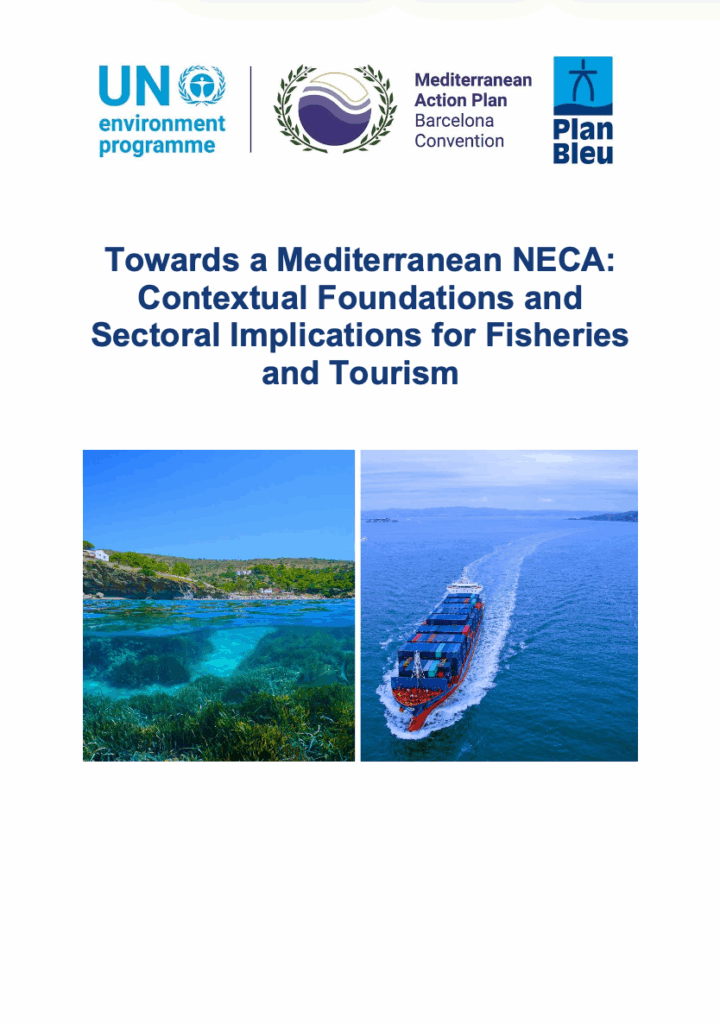
The report “Towards a Mediterranean NECA: Contextual Foundations and Sectoral Implications for Fisheries and Tourism”, developed by Plan Bleu, complements the REMPEC technical and feasibility study by analyzing the potential socio-economic impacts of a Nitrogen Oxides Emission Control Area (Med NOx ECA) on two key sectors: fisheries and tourism.
It aims to fill a knowledge gap by providing survey-based insights to inform policy decisions and support the intergovernmental process.
Key findings:
- Benefits vs. Costs : Environmental and health benefits are expected to outweigh the costs, though the burden is unevenly distributed: maritime transport and small-scale fisheries would bear the highest compliance costs, while coastal populations, public health, and tourism would be the main beneficiaries.
- Sectoral Impacts :
• Fisheries: A median increase of around 40% in compliance costs is anticipated, underscoring the need for targeted support measures for small operators.
• Tourism: The Med NOx ECA could enhance the Mediterranean’s image as an eco-friendly destination and improve air quality. It is viewed as a driver of innovation, although the “willingness to pay green” among tourists remains variable.
- Environmental Benefits : The expected improvement in marine ecosystem health is estimated at a median of 80%.
- Feasibility and Policy : The preferred policy approach combines environmental performance standards with financial incentives (rewards, tax credits, or low-interest loans), along with regulatory harmonization to ensure a just transition.