





Green Finance: A Strategic Lever for Resilience and Sustainability in the Mediterranean
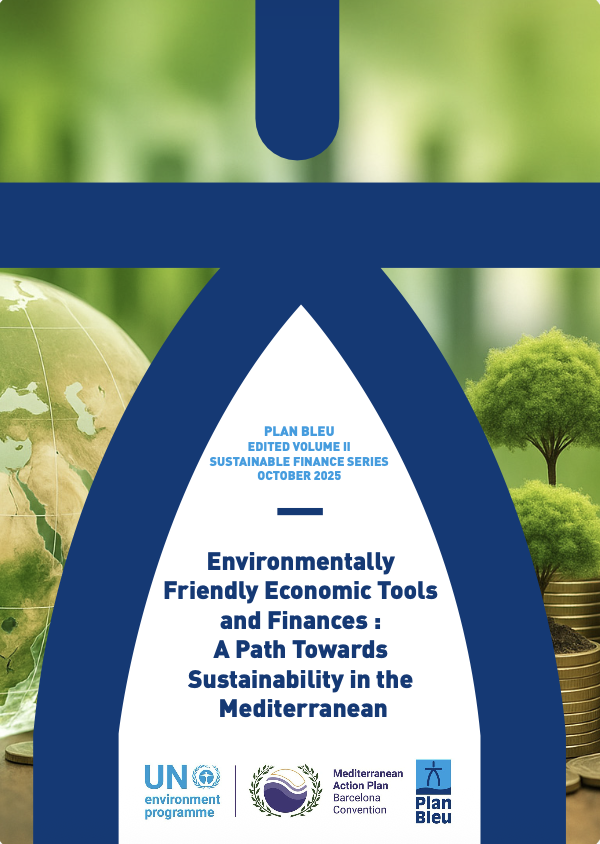
Building on our work on Environmentally Harmful Subsidies (EHS), Plan Bleu is proud to present its latest report : ” Environmentally Friendly Economic Tools and Finances: A Pathway to Sustainability in the Mediterranean”, produced under the UNEP/MAP framework.
The report provides an in-depth analysis of green finance instruments and eco-friendly economic tools, which are essential to addressing the region’s growing environmental and socio-economic challenges. It draws clear links between fiscal policies, financial instruments, and tangible outcomes on the ground across key sectors such as energy, water, and biodiversity.
A Collaborative Effort “By Mediterraneans, For the Mediterranean”
The report, led by Robin Degron and Constantin Tsakas, reflects a collaborative approach involving over 20 experts and authors from across the region, including Southern and Eastern shores. This diversity of perspectives ensures recommendations that are well adapted to the heterogeneous economic, social, and environmental contexts of the Mediterranean basin.
The report is also closely aligned with the regional policy agenda, particularly the ongoing revision of the Mediterranean Strategy for Sustainable Development (MSSD 2026–2035), where sustainable finance will be integrated as a strategic priority.
Key Findings
Key Findings
- Adoption of Green Economy Tools: Highly variable across countries, depending on political stability and institutional strength.
- Environmental Taxation: Effective when combined with strict regulations to encourage the adoption of cleaner technologies.
- Marine Biodiversity: Trust funds, blended finance, and payments for ecosystem services are identified as the most effective instruments.
- Sustainable Water Projects: Public-Private Partnerships (PPPs) and blended finance are prioritized for their scalability and environmental impact.
- Green Bonds: Moderate maturities (5–10 years) significantly reduce air pollution while supporting renewable energy projects and industrial modernization.
- Carbon Pricing: A differentiated and equitable approach is necessary to account for the varying economic capacities of Mediterranean countries.
- Mediterranean Taxonomy of Sustainable Activities: Essential to guide financial flows toward genuinely sustainable projects that are adapted to local realities.
A Collective Call to Action
This report goes beyond a purely technical analysis. It constitutes a call to action, inviting governments, institutions, investors, civil society, and citizens to join forces in turning environmental ambitions into tangible results. Plan Bleu remains committed, alongside its partners and all Mediterranean stakeholders, to building a more resilient, sustainable Mediterranean ready to meet tomorrow’s challenges.