


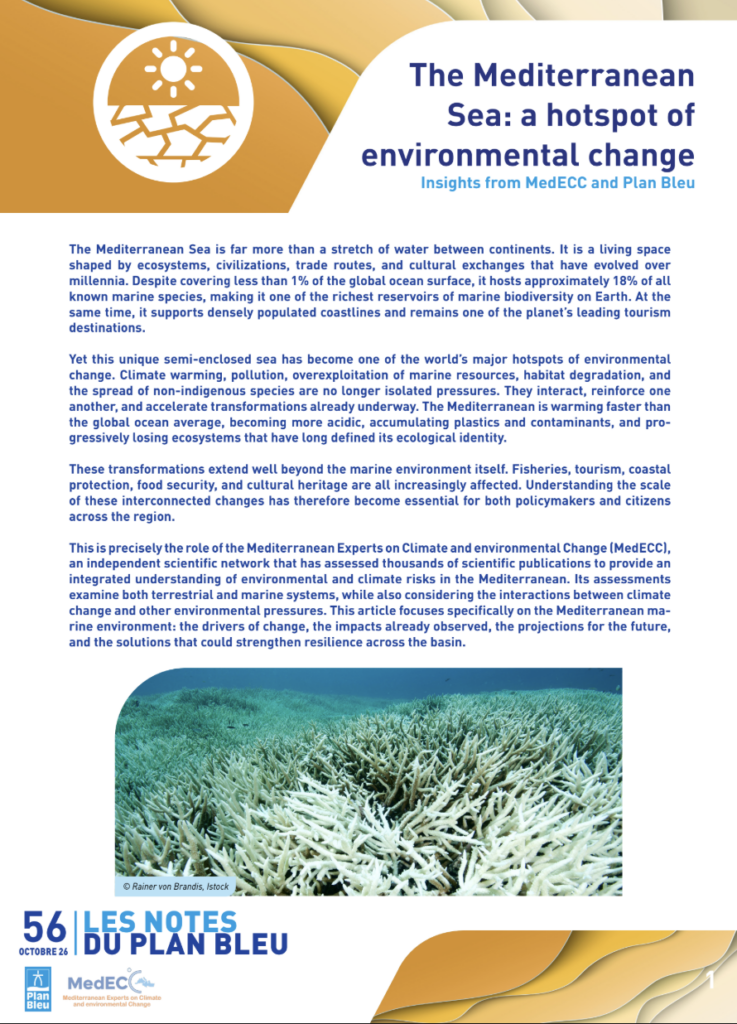
The Mediterranean Sea is far more than a stretch of water between continents.
It is a living space shaped by ecosystems, civilizations, trade routes, and cultural exchanges that have evolved over millennia. Despite covering less than 1% of the global ocean surface, it hosts approximately 18% of all known marine species, making it one of the richest reservoirs of marine biodiversity on Earth. At the same time, it supports densely populated coastlines and remains one of the planet’s leading tourism destinations.
Yet this unique semi-enclosed sea has become one of the world’s major hotspots of environmental change. Climate warming, pollution, overexploitation of marine resources, habitat degradation, and the spread of non indigenous species are no longer isolated pressures.
They interact, reinforce one another, and accelerate transformations already underway. The Mediterranean is warming faster than the global ocean average, becoming more acidic, accumulating plastics and contaminants, and progressively losing ecosystems that have long defined its ecological identity.