




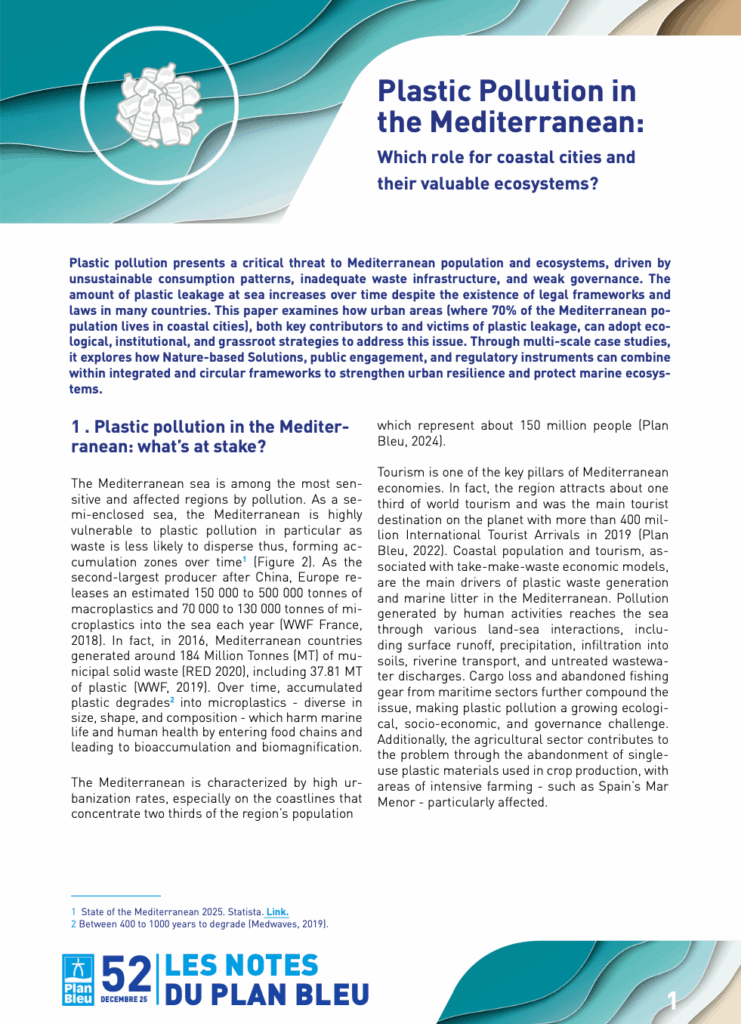
Plastic pollution poses a growing threat to Mediterranean populations and ecosystems, driven by unsustainable consumption patterns, insufficient waste management, and governance gaps. Despite existing legal frameworks in many countries, plastic leakage into the sea continues to increase.
With around 70% of the Mediterranean population living in coastal urban areas, cities are both major sources of plastic waste and among the most exposed to its impacts on biodiversity, tourism, fisheries, and public health. This note explores how coastal cities can become key actors in reducing plastic leakage through integrated approaches. It highlights the role of Nature-based Solutions and healthy coastal ecosystems, such as wetlands, river mouths, and seagrass meadows in intercepting waste and strengthening urban resilience. It also emphasizes the importance of effective governance, circular economy policies, and improved waste systems, alongside citizen engagement and grassroots initiatives that support lasting behavioral change.
By combining ecological, institutional, and community-driven actions, coastal cities can help reduce plastic pollution at source while protecting the Mediterranean Sea and the valuable ecosystems on which they depend.